

People who can use generative AI, and prompt skills
Without people who can make full use of generative AI, a company cannot bring it into its own work.
What is needed is the ability of people who know the company's work to draw out the results they want with prompts.
That ability is acquired by actually working hands-on.
Contents
What we do
We provide corporate training in which participants acquire prompt-writing skills and a working knowledge of AI and IT through in-person, hands-on practice.
Q1Who should be at the centre of spreading generative AI within the company?
Decide on a core person. That person creates good prompts that incorporate the company's work, and people on the ground use those prompts to make their work more efficient.
The thinking
Generative AI runs on words. You put your thinking into words and convey it, and you understand the words that come back. Without this exchange, you cannot draw the results you want out of generative AI.
One more thing: you need to know what a good result looks like. Only people who know the company's work know that.
How to build it
The conditions we look for in a core person are as follows.
- Understands the company's work and can see the whole picture to a reasonable degree
- Is motivated and has integrity
- Can keep revising prompts
- Can convey their own thinking to generative AI in words and understand what comes back (a condition that cannot be compromised)
The role changes with the size of the company.
| Size | Role of the core person |
|---|---|
| Large companies | Decide how to design training for the whole company, and to what level people should be developed |
| Small and medium-sized companies | Apply it directly to their own work and confirm whether it becomes more efficient |
In both cases, you cannot tell without actually using it. What cannot be fully experienced in the work alone is experienced through simulation in hands-on training.
Q2What are prompt skills, and how are they acquired?
The ability to write prompts and draw out from generative AI the information the work requires.
The thinking
Generative AI builds its answer from the words and information it is given. What you want done, in what form you want it, what material to use, and why you need it: unless these are conveyed, the result you want will not come back.
Nor is a prompt finished at the first attempt. You look at the result and add what was missing. Through this repetition you get closer to the result you want.
How to build it
A prompt needs four elements.
| Element | Details | Examples |
|---|---|---|
| Instruction | The specific task you want carried out | Write a text; tell me; translate |
| Output format | The form you want it in | In Word; in 200 characters; in CSV format |
| Input data | Additional information you pass in | Your company's manuals, website, documents |
| Context | Background and purpose | For existing customers; to develop a new business; because we want sales in the short term |
In actual work, the following two steps are repeated.
- Evaluate: review the result and judge whether it is what you want
- Iterate: add the missing information to the prompt and move closer to the result you want
A single answer alone cannot be used in the work. At the next stage, the result of one prompt is passed to the next prompt to connect them (a prompt chain), and the work is automated. This leads to AI agents.
Q3Should the use of generative AI be left to outside parties or done in-house?
It depends on your company's stage, but in the end you should reach the state where your own people can do it. If skills are lacking, you should use an outside partner. Especially the first time, using one is more efficient.
The thinking
The people who can draw results specific to your company out of generative AI are the people who know your company's work. Outsiders do not know what results you want. Looking at the results on the ground, revising the prompts yourself and moving closer to the result you want: in the end, this ability needs to be held in-house.
Using AI is not itself the purpose. The purpose is to raise the efficiency of your company's work.
How to build it
Decide how to divide the work with an outside partner according to your company's stage.
| Stage | How to proceed |
|---|---|
| The first time | Use an outside partner. Experience the way of proceeding and the key points together, in actual work |
| Some skills are lacking | Leave those parts to an outside partner: building RAG, the search mechanism, connection to internal systems and so on |
| Now able to do it in-house | Your own people write the prompts, look at the results and keep revising them |
Watch the videos (in Japanese)
Our representative, Tomoyasu Ohba, discusses these topics on the YouTube channel “システム開発のリアル:発注者向け解説” (The Reality of System Development: Explained for Clients). The videos are in Japanese.
Case studies

DX Leader Training
Four sessions, 20 hours of in-person training to strengthen prompt-writing skills and AI knowledge. In the beginner course, participants also learn the fundamentals of IT and AI, enabling them to decide for themselves which parts of their work AI should support.
DX Leader Training: Beginner Course
Skills that e-learning alone cannot build. A practical programme of hands-on exercises that gives you DX skills you can use from day one.
Free seminar for executives: now available
A free seminar available for a limited time only.
If you are unsure where to start, come and hear what generative AI can really do.
Please feel free to contact us via the enquiry form at the bottom of this page.
Why Choose Us
Small-group, hands-on practice that makes the skills stick
Training costs can be greatly reduced by using Japan's Human Resource Development Support Subsidy
A practical, job-ready curriculum delivered by instructors with extensive AI and DX experience
Curriculum
Day 1 (5 hours)
- Training goals and preparation
- Examples of DX and generative AI in practice
- What is DX?
- Goals and deliverables
- Fundamentals of prompt writing
- Homework: using prompts
Day 2 (5 hours)
- How AI works, and generative AI
- Prompt usage patterns
- Characteristics of AI projects
- AI agents and your own data (RAG)
- Homework: mapping a business workflow and proposing a project
Day 3 (5 hours)
- Fundamentals of IT systems
- Security and rules
- Using generative AI services
- Building something that works
- Homework: preparing presentation materials
Day 4 (5 hours)
- Review of what was learned
- Presentation of deliverables
- Overall feedback and certificate of completion
- Our instructors, with extensive hands-on experience in AI, DX and business transformation, will support your DX initiatives
Instructors
Programme Overview
- Format: In-person lectures, group discussion and practical exercises (with homework)
- Four sessions (5 hours × 4 = 20 hours in total)
- Prerequisite: Participants should understand the overall picture of their own department's work
- Schedule: One month (once a week × 4 sessions)
- To be prepared by your company:
- Training venue and related equipment (projector, network access, etc.)
- A PC for each participant (with internet access and access to generative AI services)
- Capacity: 3 participants
Customer Voices
Heart Foods Service Co., Ltd.
Heart Foods Service, founded in 1991, runs a catering business serving weddings, funerals and other ceremonial occasions. To accelerate its DX, the company selected three staff members to take the Beginner Course: four sessions, 20 hours in total.


Yoshii-san, Sasaki-san, Sekiya-san
Feedback from participants:
The hands-on prompt-writing practice was extremely useful, and I lost track of time. I wished it could have gone on longer.
The overall atmosphere was good. I would like to take the Intermediate Course as well.
Johoku Ryutsu Co., Ltd.
Founded in 1977 and based in Itabashi, Tokyo, Johoku Ryutsu operates trucking, staffing and warehousing businesses. A logistics company with 140 employees, it also has offices in Saitama, Kanagawa and Ibaraki. To advance its DX, the company selected three staff members to take the Beginner Course: four sessions, 20 hours in total.
 Johoku Ryutsu Co., Ltd.
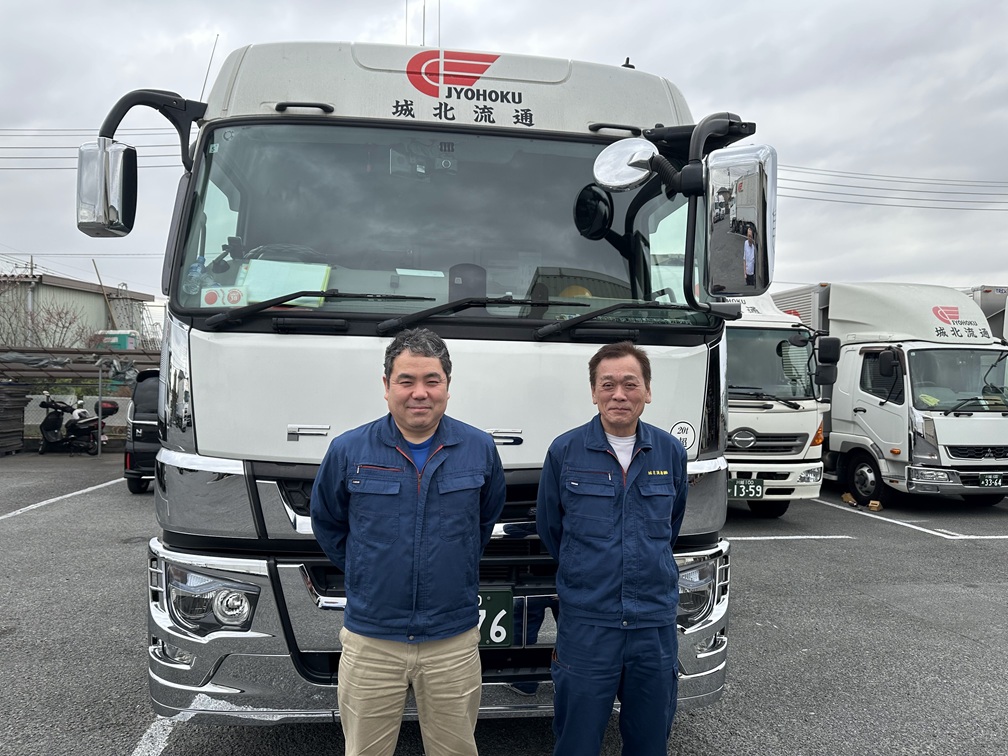
Ishii-san, Fujita-san
Feedback from participants:
It was a great help that the instructors checked each person's progress as we went along. They had deep expertise and answered our questions precisely, so I understood the material well. Thank you very much.
Ashitaba Co., Ltd.
Ashitaba Co., Ltd. runs "Teppan! Ashitaba", a much-loved teppanyaki izakaya in the Numazu and Mishima area. Rooted in the local community with a menu built on local ingredients, including its signature "Kyabe II" and Fujinomiya yakisoba, the company also puts great effort into helping its staff grow. Aiming to bring DX and generative AI into its day-to-day operations, six core members took the Beginner Course.
URL:https://www.teppan-ashitaba.jp/

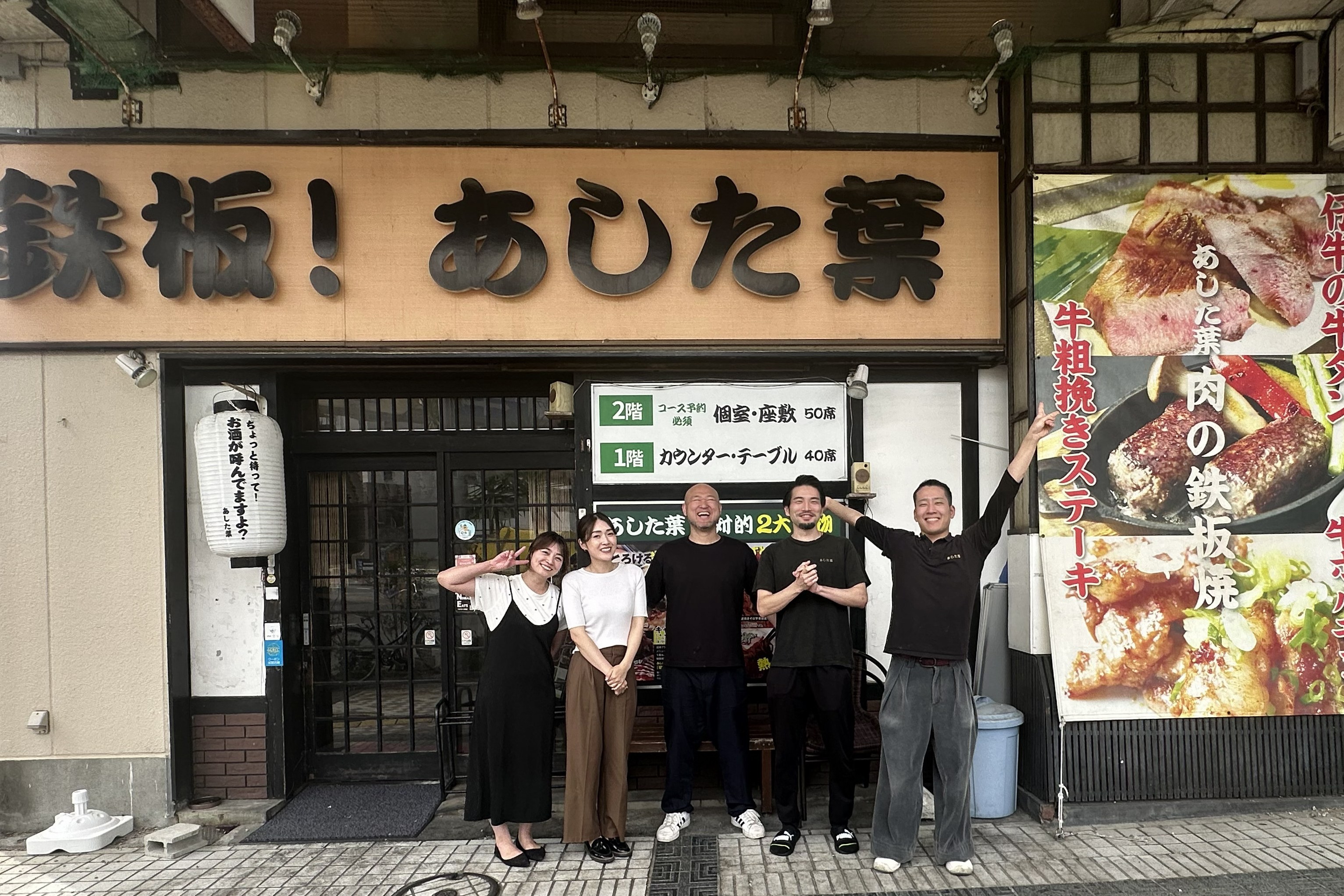
Feedback from participants:
I was surprised at how much AI can do and how far the technology has advanced, further than I had imagined. As more and more tasks no longer need to be done by us, we are now able to use AI well while identifying where we should really focus our efforts.
I learned things about DX that I would never have studied on my own, which was very worthwhile. I normally use ChatGPT, but having learned that Claude is more accurate in many respects, I intend to start using it straight away.
Denner Systems Co., Ltd.
Denner Systems Co., Ltd. is an entertainment agency. Based in Minami-Azabu, Tokyo, since its founding in 1999, the company has supported the wide-ranging activities of rakugo storyteller Shofukutei Tsurube, including the stage show "TSURUBE BANASHI" and the documentary film "Bakemon". To advance its DX, the company took the Beginner Course: four sessions, 20 hours in total.

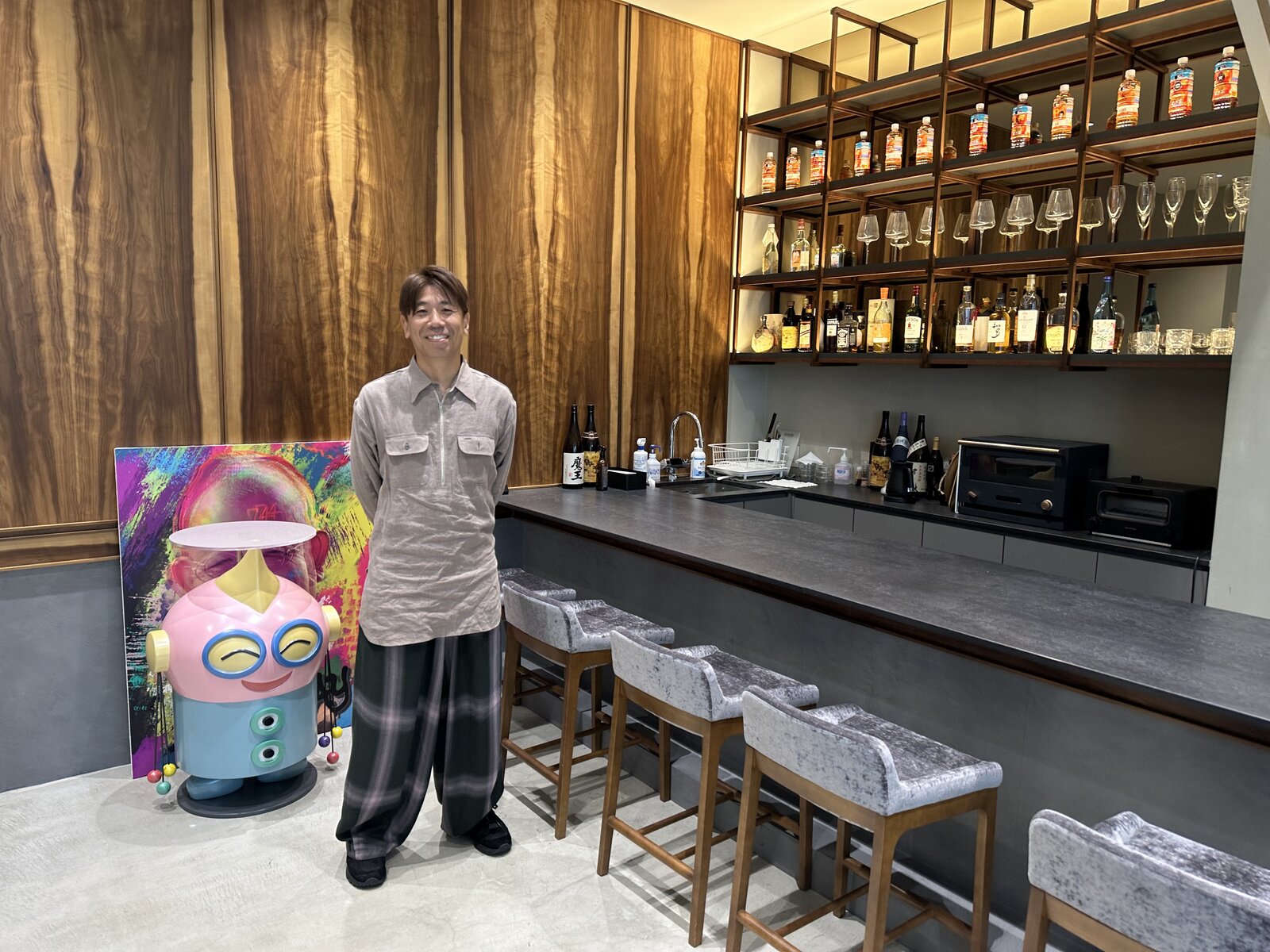
Uki-san
Feedback from participants:
Learning how to create tables with AI left a particularly strong impression on me. The training was so satisfying that I felt it could have run for more days and longer hours.
I also became interested in how AI works, including transformers. I am interested, too, in the Intermediate Course for mid-level staff and managers, and in introducing generative AI lectures into our in-house training.